.webp)
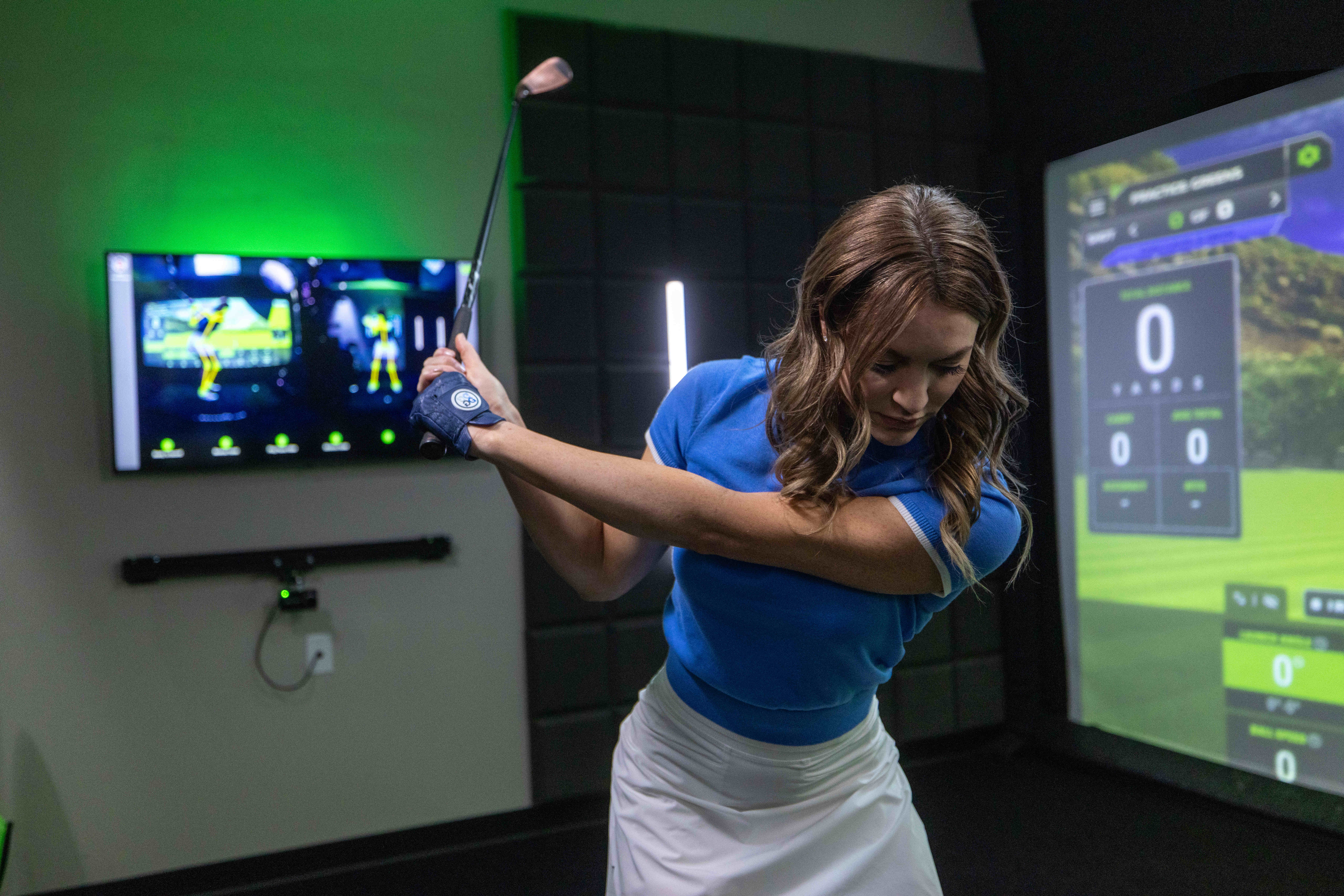
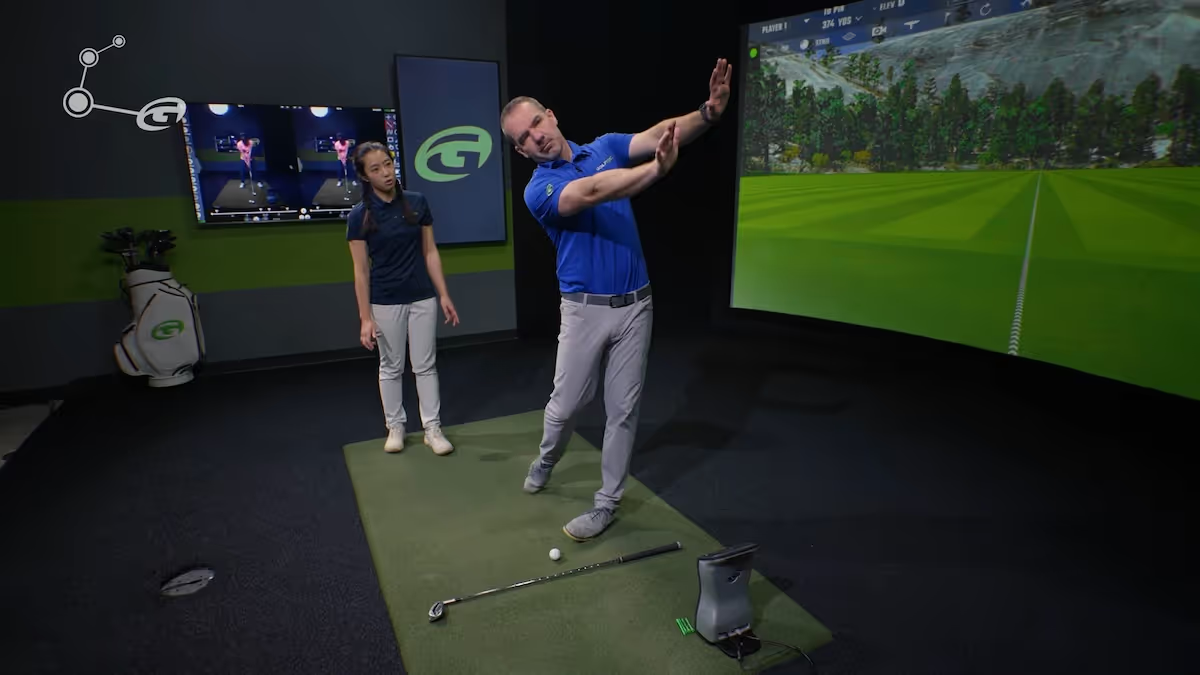
Lead elbow flex refers to the bend in your lead (front) elbow during the golf swing. More flex usually means more inconsistency—causing fat or thin shots. Better players maintain a straighter lead arm by pushing their arms outward throughout the swing, rather than pulling them in toward the body.
Table of Contents:
As a GOLFTEC coach, I wear many hats. Teacher, friend, cheerleader, bad guy (reality checker) and therapist. My students need slightly different things from me depending on what stage of their development they're at and what they're working on. But the common theme is that everyone is searching for clarity.
Typically, students come into the centre with their own perception of what their problems are — and that doesn't always match reality. In Hong Kong, where golf time is precious and course fees aren't cheap, that lack of clarity can send golfers searching for answers in all the wrong places (social media instruction being the usual rabbit hole). One of my favourite things about coaching at GOLFTEC is that I have data to back up everything that happens in a lesson. I don't have to rely on opinions or feelings — I can show you the numbers. When we measure, we don't have to guess, and that's how we help students gain the clarity they're searching for.
We aim to achieve this in all of our golf lessons in Hong Kong, but GOLFTEC students also have the ability to practice in the training centre outside of lesson time. Regular coaching, combined with purposeful practice, is a very effective combination. Here's what I mean by purposeful practice and what it looks like:
You Should Be Targeting Something Specific and Be Able to Measure It
Anyone who has met me will appreciate the irony of me using a gym analogy, but purposeful practice should mirror a proper gym session. A well-structured gym session targets a specific muscle group with quantified exercises you can track over time. A well-structured golf practice session should do the same — using various drills to target a specific fundamental skill: contact, power, or direction.
The most important fundamental skill in golf is controlling your contact. This has two components: hitting the middle of the face, and delivering a downward angle of attack when using an iron. At GOLFTEC Hong Kong, you can use our Foresight GC Quad to get immediate feedback on whether you've achieved your intention — no guessing required.
So you might start your practice session with 20 shots using a pitching wedge, half swings, focusing on producing centred strike with a downward angle of attack greater than 3 degrees. If you're more experienced, try over-exaggerating the downward attack angle — try to get "too much" of it. Most golfers stop once they start hitting the right amount of change. Powerful learning happens when you also know what too much feels like. Once you've nailed it with short swings, graduate to bigger swings and longer clubs to see if you can maintain that solid, centred contact.
The key: go into your practice session with a plan. Decide what you're working on and how you're going to measure it. Are you tracking club data? Video feedback? A specific OptiMotion number? Whatever it is, be kind to yourself — judge yourself on one thing at a time. Trying to juggle too many swing thoughts at once rarely ends well.
Use Constraints and Manipulators to Force the Change
One of the biggest challenges in golf is that what you feel you're doing and what you're actually doing are often two completely different things. When you're moving at full speed, it's hard to know where the club is in space. A great solution is to use constraints in practice — tools that force you to change your movement in order to succeed, and that give you instant feedback when you don't.
A towel placed 10cm behind the ball tells you right away if you're hitting the ground too early. A pool noodle positioned outside the ball forces you to swing more in-to-out — if you keep hitting it, you know you're coming over the top. These aren't just drills; they're feedback mechanisms that make every shot meaningful.
Using drills like these is an excellent way to discover what a better swing movement actually feels like to you, with real-time feedback on every shot. At GOLFTEC Hong Kong, the training bays are set up to use these tools effectively year-round — including through the summer months when getting outdoors to practice is genuinely unpleasant.
Vary Your Practice and Create Some Competitive Pressure
Block practice — hitting 20 balls in a row with the same drill — is extremely useful for skill acquisition and confidence building. But a portion of every practice session should reflect what you actually face on the course: random, varied, and with something at stake.
Think about how golf actually works. You rarely hit the same club twice in a row (unless you've just sent one out of bounds). You're constantly switching between targets, distances, and lies. Hitting the same shot repeatedly from a studio mat doesn't replicate that challenge. Hong Kong golfers who only practice this way often find their range game doesn't translate when they get to Clearwater Bay or Kau Sai Chau.
At GOLFTEC, there are play modes designed to practice with more purpose. The Yardage Randomizer is exactly what it sounds like — you set a distance range (say, 50–150 yards) and the target changes after every shot. You can play virtual courses that recreate real course conditions. Or you can design your own skills challenge:
- 50 yards, 75 yards, 100 yards, 125 yards, 150 yards
- 3 balls to each target
- Track your accumulated proximity to the hole
- Note your personal best and try to beat it week to week
This kind of practice creates competitive pressure and ensures every ball counts. It gives you a taste of the feelings you'll experience on the course — and preparing for those nerves is the only way to get more comfortable with them when it matters.
Summary
Golf is hard. It's a lot harder without a plan. It's nearly impossible to improve if you don't know what you should be working on or how to practice it. At GOLFTEC Hong Kong, we remove the guesswork: our coaches use data-driven methods to give you clarity on exactly what to focus on, and our training bays give you the tools to practice it properly in between sessions. That combination of regular coaching and evidence-based practice is what actually moves the needle.
Want to start practicing with a plan? Book a session at GOLFTEC Hong Kong and let us show you exactly what to work on — and how to measure it. Or explore our coaching packages to find the right program for your game.

Play the best golf of your life. GOLFTEC Coaches use cutting-edge tech and proven methods to level up your game fast.
Book a Lesson
Play Better!