.webp)


See what makes a GOLFTEC Swing Evaluation the best way to start improving your game - with personalized coaching, 3D swing analysis, and a clear plan for long-term success.
Table of Contents:
Many golfers spend hours thinking about driver distance, iron accuracy, and wedge spin, but overlook the club they use most often to score: the putter.
That is a mistake.
While long-game improvements can be exciting, putting is where rounds are often won or lost. Even a small improvement on the greens can have a huge impact on scores. A properly fitted putter can improve comfort, consistency, alignment, and confidence — all essential factors for making more putts.
Putter fitting is not just for elite players or low handicappers. It is valuable for golfers of every ability, from beginners learning proper setup fundamentals to experienced players trying to eliminate small inconsistencies from their stroke.
Because putting is such a repeatable and feel-based part of the game, the right putter can quietly transform performance without requiring a complete swing change.
The Putter Is the Most Used Club in the Bag
On a typical round, the putter gets more use than any other club. Most golfers take between 30 to 40 putts per round, and for many amateurs, that number is even higher.
When a single club accounts for so many strokes, it makes sense to treat it with the same level of importance as a driver or iron set.
Yet many golfers still choose a putter based purely on looks, brand preference, or a few quick rolls in a golf shop. Unfortunately, a putter that feels good initially may still be the wrong fit in terms of:
- Length
- Lie angle
- Loft
- Head style
- Grip size
- Weighting and balance
The result is often poor setup, inconsistent contact, and unnecessary missed putts.
What Does a Putter Fitting Actually Look At?
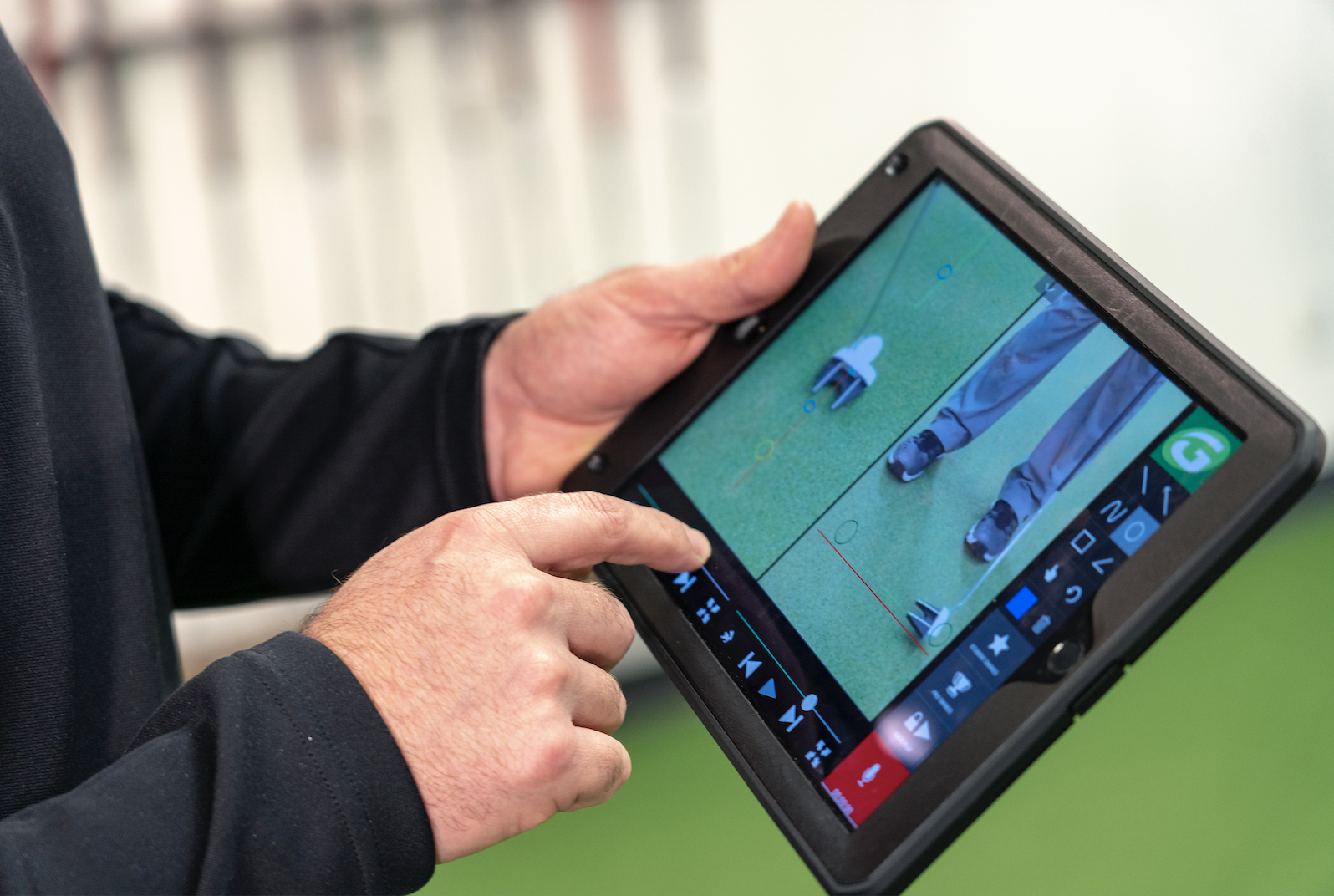
A professional putter fitting goes far beyond choosing between a blade or mallet design. It evaluates how a golfer sets up, how the stroke moves, and how the putter performs at impact.
Key Elements of a Putter Fitting
1. Length
Length affects posture, eye position, setup comfort, and shoulder movement during the stroke.
2. Lie Angle
Lie angle determines whether the putter sits flat on the ground and helps the face start the ball on line.
3. Loft
Loft influences launch and how smoothly the ball transitions into a true roll.
4. Head Style
Different head designs suit different stroke patterns and visual preferences.
5. Grip Size
Grip thickness can influence hand action, feel, and face control.
6. Weighting & Balance
Balance affects tempo, stability, and distance control.
When these elements are properly matched to the golfer, setup becomes more natural and the putting stroke becomes easier to repeat consistently.
Why Length and Lie Angle Matter So Much
Two of the most important aspects of putter fitting are length and lie angle.
Incorrect Length Creates Setup Problems
If a putter is too long, golfers often stand too upright and lose control of the stroke. If it is too short, posture can become cramped and uncomfortable.
Both situations can negatively affect:
- Shoulder movement
- Eye line
- Stroke path
- Face control
- Overall consistency
Lie Angle Impacts Start Direction
Lie angle is equally important. If the toe or heel sits too high at impact, the face may point slightly offline.
Even tiny face-angle errors can cause missed putts — especially on short putts where precision is critical.
A properly fitted lie angle helps the putter sit squarely and improves the chances of starting the ball on the intended line.
Matching the Putter to Your Stroke
Not every golfer putts the same way.
Some players use a straight-back, straight-through stroke. Others naturally create a slight arc. Some golfers prefer the stability of a heavier mallet, while others prefer the feel and release of a blade.
That is why matching the putter to the golfer’s natural stroke is so important.
Blade vs. Mallet: Which Is Better?
There is no universal “best” putter.
- Mallet putters often provide more stability and alignment assistance.
- Blade putters may suit players who prefer more face rotation and feel through impact.
The right choice depends on:
- Stroke type
- Tempo
- Visual preference
- Feel
- Confidence at address
When the putter complements the stroke naturally, golfers no longer feel like they are fighting the club.
Confidence on the Greens Changes Everything
Putting is as mental as it is technical.
If the putter feels awkward, sits poorly behind the ball, or produces inconsistent results, doubt appears quickly. That doubt often leads to tentative strokes and defensive putting.
A fitted putter creates trust.
When golfers know the club suits their setup and stroke, they are more likely to make confident, committed motions. That confidence alone can dramatically improve performance on the greens.
In putting, believing the ball will start on line and roll properly is often half the battle.
Better Distance Control = Fewer Three-Putts
Many golfers focus heavily on direction, but speed control is equally important.
A poorly fitted putter can make distance control inconsistent because impact conditions vary from stroke to stroke.
For example:
- Incorrect loft can cause the ball to launch poorly
- Poor weighting can disrupt tempo
- Incorrect length can affect strike consistency
A properly fitted putter helps produce a more predictable roll and more reliable speed control.
The result?
- Fewer three-putts
- Shorter comeback putts
- More stress-free pars
- Better scoring consistency
Small Improvements Can Save Many Shots
One of golf’s biggest myths is that equipment changes only make a small difference.
In putting, even tiny improvements matter.
Saving just one or two putts per round can quickly lower scores and reduce handicaps over time.
The best part about putter fitting is that it does not require rebuilding a golfer’s swing. Often, it simply removes obstacles that prevent the golfer from performing naturally.
Sometimes the golfer already has a good stroke — the wrong putter is simply getting in the way.
Who Should Get a Putter Fitting?
Putter fitting can benefit golfers of every skill level, but it is especially valuable for players who:
- Miss too many short putts
- Struggle with distance control
- Feel uncomfortable at address
- Frequently change putters without improvement
- Want more consistency in alignment and setup
- Are unsure whether their current putter suits their stroke
Even golfers who already like their putter are often surprised by what a fitting reveals. Small adjustments in length, loft, lie angle, or grip can completely transform how the putter feels and performs.
Final Thoughts
Putter fitting is one of the most overlooked — yet most valuable — parts of equipment optimization in golf.
Because putting accounts for so many strokes during a round, improvements on the greens can immediately translate into lower scores.
A properly fitted putter can improve:
- Alignment
- Comfort
- Roll quality
- Confidence
- Distance control
- Overall consistency
For golfers serious about improving performance, putter fitting is not a luxury. It is one of the smartest investments they can make.
The right putter will not magically fix every issue, but it can make good putting easier and bad putting less likely.
And on the greens, that difference can completely change a round.
Ready to Improve Your Putting?
A properly fitted putter can help you start more putts on line, improve distance control, and build confidence on the greens.
Whether you are struggling with consistency or simply want to lower your scores, a professional putter fitting can reveal the small adjustments that make a big difference.
Book Your Putter Fitting Today
Experience a personalised putter fitting session with expert guidance, advanced analysis technology, and the opportunity to test different putter styles, lengths, and setups tailored to your stroke.
Stop guessing on the greens and start putting with confidence.
Book your Putter Fitting at GOLFTEC today and discover how the right putter can transform your game.

Play the best golf of your life. GOLFTEC Coaches use cutting-edge tech and proven methods to level up your game fast.
Book a Lesson
Play Better!